




For AI, SaaS or Web3 startups, the premium domain is no longer a branding luxury—it is a strategic business asset. The Investors increasingly view Premium Domains as signals of market readiness, credibility or long-term category leadership. A clean, authoritative domain helps founders establish trust the faster with customers, partners and venture capital firms.
The impact extends beyond perception. From a premium domain startup valuation perspective, category-defining domains strengthen defensibility or support stronger valuation the narratives by positioning the company as a market leader. As core startup branding the infrastructure, the domain becomes the foundation for product identity, marketing campaigns, enterprise sales or customer communications.

The startup domain name impact is measurable. Memorable domains improve click-through rates, increase direct traffic, reduce customer acquisition costs (CAC) and accelerate enterprise buying decisions. They eliminate brand confusion and create a more seamless path from awareness to conversion.
In an increasingly competitive funding, founders are looking for assets that compound value over time. The right domain strengthens trust, reduces execution risk and amplifies growth efforts—making it one of the most leveraged investments an early-stage startup can make.
“A category-defining premium domain isn’t an administrative marketing expense; it is a permanent balance sheet asset that establishes a competitive moat before you even enter the investor data room.”
What Makes the Domain Premium? Why Investors Treat It as Asset Not Branding
A premium domain is a short, memorable and highly desirable web address that carries inherent market value due to its scarcity, brandability and strategic relevance. These domains typically consist of single-word keywords, category-defining terms, strong acronyms or exact-match brand names that are difficult—or impossible—to replicate.

Unlike the standard registrations, premium the domains function as digital infrastructure assets. They sit at the foundation of a company’s online the identity, powering websites, email systems, customer portals, APIs or brand communications. For this reason, experienced investors often view of domain ownership through the same lens as intellectual property, proprietary technology or strategic patents.
Key characteristics of a premium domain include:
- Short and memorable naming structure
- Strong brand authority and trust signals
- Category-defining or industry-relevant keywords
- High direct-navigation and referral potential
- Long-term resale and liquidation value
From the premium domain startup valuation of perspective, ownership of a category leading domain can strengthen the investor confidence by reducing of branding risk or increasing market defensibility. As core startup branding the infrastructure, a premium the domain creates a consistent foundation for growth while improving the recognition across every customer touchpoint. The resulting startup of domain name impact extends beyond the branding, influencing trust, conversion rates, customer acquisition costs orlong-term enterprise value.
Why Premium Domains Strengthen Your Series ‘A’ Valuation Story
The investors are not just evaluating revenue growth, product adoption or market size. They are assessing whether a startup possesses the assets, positioning and infrastructure required to become a category leader. This is where premium domain startup valuation becomes relevant.
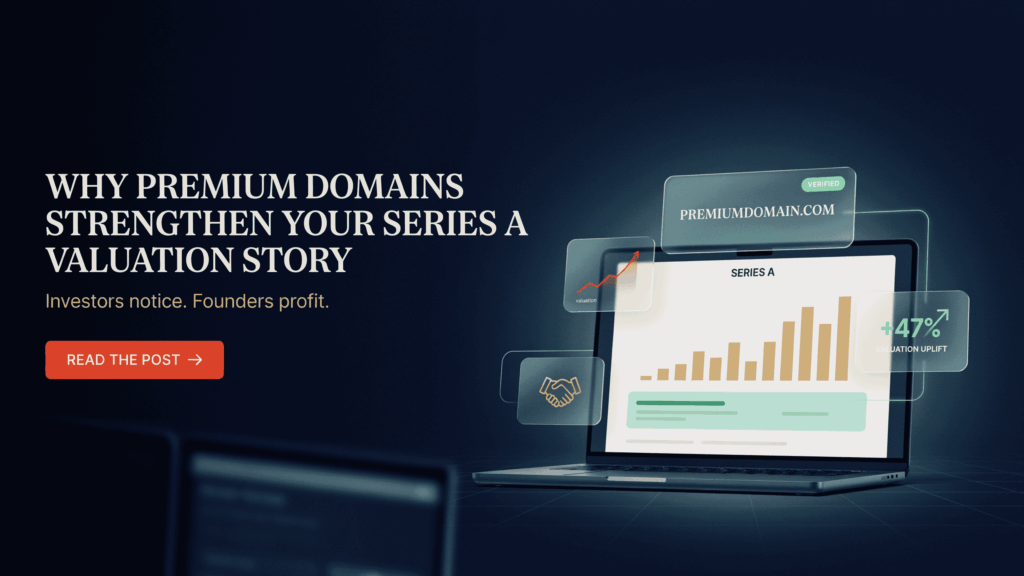
A premium domain immediately reduces one of the largest long-term risks investors monitor: future rebranding costs. The Startups operating on fragmented, hyphenated or temporary domains often face expensive migrations as they scale. In the contrast, a category-defining the domain signals that the company has already secured the critical piece of its digital real estate.
From an investor’s perspective, a premium of domain contributes to valuation in the several ways:
- Strengthens brand authority and market credibility
- Improves customer trust and conversion rates
- Creates a defensible competitive advantage
- Reduces future customer acquisition costs (CAC)
- Acts as a valuable intangible asset on the balance sheet
“Venture capitalists look for operational velocity. Securing your definitive brand real estate early signals that a founding team is building for permanent market scale, not a temporary proof-of-concept.”
As the core element of startup branding infrastructure, the domain becomes the foundation supporting marketing, sales, partnerships, investor communications and enterprise customer acquisition. Every campaign, email, API endpoint and customer interaction benefits from a trusted and memorable identity.
The startup domain name impact becomes even more visible during fundraising. The premium domain helps founders present a stronger narrative around the market leadership, scalability or long-term brand equity. Investors understand that while products evolve or markets shift, ownership of the category defining digital asset can be continue generating value.
Securing Your Core Infrastructure: The Owrbit Premium Domains Assets
When a startup prepares to scale, securing the right digital real estate is a time-sensitive operational priority. Elite tech leads understand that relying on fractured retail registrars for category-defining domains introduces massive security gaps.
This is why high-growth founders leverage specialized infrastructure management platforms. Through the Owrbit Premium Domain, startups can acquire and consolidate high-authority digital assets directly alongside their high-performance compute and network security layers.
Below is a curated selection of enterprise-grade domains currently available for immediate acquisition, specifically targeted for AI, SaaS, Web3, and privacy-focused infrastructure deployments:
The Web3 & Crypto Matrix
- Asset:
trustwallet.net - Valuation: $35,000
- Vintage: Est. 2017
- Strategic Advantage: A legacy, global brand-level asset. For decentralized finance and Web3 applications, securing a globally recognized trust string provides immediate, undeniable institutional authority before a single line of smart contract code is audited.
The Artificial Intelligence & Machine Learning Tier
- Asset:
ranktracker.ai- Valuation: $14,999
- Vintage: Est. 2026
- Strategic Advantage: The
.aiextension is the definitive standard for modern generative AI startups. This specific asset carries massive inherent B2B search intent and high CPC (Cost Per Click) value, functioning as a permanent organic lead generation engine.
- Asset:
geminieditor.com- Valuation: $6,999
- Vintage: Est. 2026
- Strategic Advantage: A Tier-1 trust asset perfectly positioned for AI-assisted content scaling, machine learning text generation, or autonomous SaaS workflow tools.
The SaaS & High-Performance Infrastructure Stack
- Asset:
riovps.com- Valuation: $29,999
- Vintage: Est. 2025
- Strategic Advantage: A clean, brandable root domain tailored for the competitive server, virtualization, and hosting sector. It commands absolute authority for companies deploying enterprise-grade compute nodes and high-speed uplinks.
- Asset:
tallyadmin.com- Valuation: $24,499
- Vintage: Est. 2026
- Strategic Advantage: The ultimate B2B authority domain for financial SaaS, accounting automation, and enterprise compliance management platforms.
- Asset:
offshores.net- Valuation: $9,999
- Vintage: Est. 2025
- Strategic Advantage: For SaaS architectures specializing in privacy, legal compliance, or secure decentralized data hosting, this exact-match asset provides an immediate, globally understood mandate of privacy and security.
Taking Immediate Action: A premium domain isn’t just a URL; it is the entry point to your corporate network. Forward-thinking technical leads utilize platforms like Owrbit to ensure these critical brand assets are rapidly secured, cryptographically protected, and seamlessly integrated into their broader enterprise infrastructure.
The Technical Due Diligence Checklist Every SaaS and Web3 Startup Should Pass
When the institutional investors evaluate the SaaS and Web3 company, they conduct far more than a financial review. The modern technical due diligence checklist SaaS assessment examines the infrastructure, security controls, operational resilience and digital assets that support long-term growth. A startup may have impressive revenue metrics, but weaknesses in foundational infrastructure can significantly increase perceived investment risk.
One area that is frequently overlooked is domain ownership or management. The Investors increasingly recognize that a company’s the domain portfolio is part of its core infrastructure because it controls websites, APIs, authentication systems, email delivery, customer portals and brand identity.
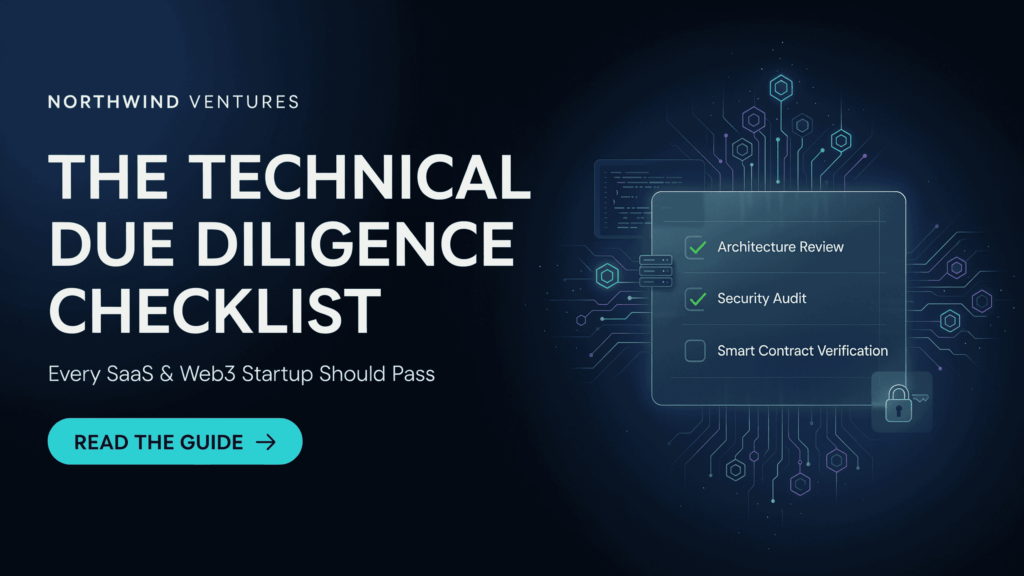
- Domain ownership verification and asset control
- DNS security configuration and DNSSEC deployment
- Multi-factor authentication (MFA) enforcement
- Email security protocols (SPF, DKIM and DMARC)
- Cloud infrastructure architecture and redundancy
- Access management and privileged account controls
- Brand protection domain strategy implementation
- Incident response and disaster recovery readiness
From a premium domain startup valuation perspective, a consolidated and professionally managed domain portfolio demonstrates maturity and operational discipline. It also strengthens startup branding the infrastructure by ensuring that customers,the investors or partners interact with the trusted and consistent digital identity.
The startup domain name impact extends beyond marketing. Poorly managed domains create security vulnerabilities, phishing risks, customer confusion and future migration costs. Conversely, startups that treat the domains as infrastructure assets signal stronger governance, lower operational risk and greater scalability.
Why High-Growth Startups Consolidate Premium Domains on Enterprise Infrastructure
As the startups scale, their domain portfolio becomes one of their most valuable digital assets. A company may own its primary .com, .ai, defensive registrations, product domains and customer-facing portals. Managing these assets across multi consumer-grade registrars creates operational complexity, the security gaps and governance challenges that become increasingly visible during a technical due diligence checklist SaaS review.
This is why many growth-stage companies consolidate domain management onto enterprise-grade platforms such as Owrbit, where premium domains, DNS infrastructure and security controls can be managed through a unified.
“If your premium domains are scattered across fragmented retail registrars, your infrastructure layer is fundamentally exposed. Enterprise security requires consolidating high-value digital real estate under unified corporate controls.”
Benefits of Infrastructure-Level Domain Management:
| Infrastructure Advantage | Business Outcome |
|---|---|
| Centralized Domain Portfolio | Better visibility and asset control |
| Hardened DNS Management | Reduced risk of DNS hijacking and outages |
| Organization-Wide MFA | Stronger account security |
| Unified Monitoring | Faster detection of configuration issues |
| Scalable Infrastructure Integration | Improved operational efficiency |
For startups focused on the premium domain startup valuation, consolidation demonstrates operational maturity or risk management. It also strengthens startup branding the infrastructure by ensuring that critical digital assets during remain to protected as the company grows.
Case Studies: How Premium Domains Strengthened Market Position & Investor Confidence
The value of a premium domain is a best understood through the real-world outcomes. Across AI, SaaS or Web3 markets, several high-growth companies upgraded to the category-defining domains as they scaled. While the domain alone does not create success, it often becomes part of a broader strategy focused on trust, brand authority or long-term market leadership.

| Company | Domain Upgrade | Strategic Outcome |
|---|---|---|
| Dune Analytics | From Dune.xyz to Dune.com | Enhanced institutional credibility and global brand recognition |
| Meter | From MeterUp.com to Meter.com | Simplified branding and strengthened enterprise positioning |
| Crypto.com | Acquired Crypto.com | Established immediate authority within the cryptocurrency industry |
“The data proves that elite technical teams do not wait for capital to acquire their definitive domain extensions; they strategically deploy the domain to command the valuation required to secure that capital.”
Key Lessons for Founders and Investors :
- Premium domains increase trust and brand authority
- Exact-match domains reduce customer confusion
- Strong digital assets support long-term growth narratives
- Domain ownership strengthens competitive differentiation
- The Premium domain startup valuation benefits from the enhanced market credibility
The most of successful startups view the premium domains as strategic the assets. They invest in digital real estate that strengthens trust, improves scalability and supports long-term enterprise value creation.
Dune.com: A Domain Upgrade That Reinforced Unicorn Status
The Dune Analytics provides the strong example of how the premium domain can support growth or market credibility. The company transitioned from Dune.xyz to Dune.com as it expanded from the niche Web3 analytics platform into a globally recognized data the infrastructure provider.
The move is aligned with the Dune’s rapid growth or the increasing institutional adoption. By securing the category-defining .com domain, the company strengthened trust, improved brand memorability or presented a more authoritative identity to the enterprise customers and investors. Around the same period, Dune raised a $69.4 million Series B and surpassed a $1 billion valuation.
From the premium domain startup valuation perspective, the upgrade reduced the branding friction or reinforced long-term market leadership. It also enhanced startup branding infrastructure by creating a unified identity across products, documentation and customer communications.
Meter.com: Eliminating Brand Friction Before Scaling Infrastructure
The Meter’s transition from MeterUp.com to Meter.com highlights how the premium domains can be strengthen market positioning before the company enters its next growth phase. As the provider of enterprise network infrastructure, Meter needed a brand identity that matched the simplicity or reliability of its product.
The upgrade to an exact-match domain removed unnecessary friction from customer interactions, sales conversations and brand recognition. Shortly after the securing of Meter.com, the company raised a $38 million funding round, further the establishing itself as the serious player in enterprise networking.
From the premium domain startup valuation perspective, the move reinforced credibility or reduced future rebranding the risk. It also strengthened startup branding infrastructure by aligning the company’s name, product and domain into a single authoritative asset.
For the investors reviewing the technical due to diligence checklist SaaS, the exact-match of domains signal operational maturity and long-term strategic thinking.
Crypto.com: The $12 Million Domain Acquisition That Redefined an Industry
Few the domain acquisitions demonstrate the power of digital real estate better than the Crypto.com’s purchase of Crypto.com, reportedly valued at approximately $12 million. Originally operating as Monaco, the company made a bold decision to acquire one of the most valuable category-defining domains in the cryptocurrency sector.
The impact was immediate. By owning the industry’s most the recognizable keyword, the Crypto.com established instant authority, trust or global brand recognition. Instead of spending educating users about a new brand name, the company of secured a domain that already represented the entire market category.
| Strategic Benefit | Business Impact |
|---|---|
| Category-Defining Domain | Instant industry authority |
| Strong Brand Recall | Lower customer acquisition friction |
| Global Trust Signal | Faster user adoption |
| Defensive Brand Asset | Long-term competitive advantage |
From a premium domain startup valuation perspective, the acquisition strengthened the company’s market position and created a powerful competitive moat. It also became a cornerstone of its startup branding the infrastructure, helping the drive worldwide recognition or user trust.
Frequently Asked Questions
As the premium domains become increasingly the important for fundraising, cybersecurity or market positioning, founders often have questions about their impact on the startup growth. The following FAQs address the most common concerns related to premium domain startup valuation, startup branding infrastructure and brand protection domain strategy.
Do premium domains really increase startup valuation?
A premium domain does not automatically increase valuation, but it can strengthen investor confidence. Category-defining domains improve brand authority, reduce future rebranding costs, and support customer acquisition efforts. These factors contribute to stronger valuation narratives, particularly for AI, SaaS, and Web3 startups.
Why are premium domains important for AI startups?
AI startups often compete in crowded markets where trust is critical. A premium domain strengthens startup branding infrastructure, improves memorability, and creates an immediate impression of credibility with customers, partners, and investors.
What is a brand protection domain strategy?
A brand protection domain strategy involves registering defensive domain variations, securing key TLDs, implementing DNSSEC, Registry Lock, and email authentication protocols to prevent phishing, impersonation, and domain abuse.
Which domain extensions should startups secure?
Most startups should secure their primary brand across .com, .ai, .io, and .app where relevant. Defensive registrations help prevent competitors and cybercriminals from exploiting lookalike domains.
What is the difference between a standard domain and a premium domain?
A standard domain is typically newly registered and widely available. A premium domain is often shorter, more memorable, keyword-rich, brandable, or category-defining. Premium domains usually have greater market value and stronger branding potential.
How does a premium domain reduce customer acquisition costs (CAC)?
Premium domains improve direct traffic, increase click-through rates, and strengthen trust signals. Customers are more likely to remember and engage with authoritative domains, reducing marketing friction and lowering overall acquisition costs.
What security measures should protect a high-value domain?
Every high-value domain should be protected with:
- Multi-factor authentication (MFA)
- DNSSEC
- Registry Lock
- SPF, DKIM, and DMARC
- Centralized domain management
Many startups use infrastructure-focused platforms such as Owrbit to consolidate these controls and improve domain security management.
Why is DNSSEC important for startups?
DNSSEC helps prevent DNS spoofing and malicious redirection attacks by validating DNS responses. It is considered a foundational security control for companies managing valuable digital assets.
What is Registry Lock and do startups need it?
Registry Lock is an advanced security feature that prevents unauthorized domain modifications or transfers. For startups operating mission-critical websites, applications, and customer portals, Registry Lock provides an additional layer of protection against domain hijacking.
Can a premium domain become a competitive moat?
Yes. Category-defining domains are scarce assets that competitors cannot easily replicate. Owning a premium domain strengthens market positioning, supports long-term brand recognition, and contributes to sustainable competitive differentiation.
When should a startup invest in a premium domain?
The ideal time is before significant scaling begins. Acquiring a premium domain early is often less expensive than purchasing it after fundraising, brand growth, or increased market visibility.
How many domains should a startup own?
Beyond its primary domain, a startup should secure strategic brand variations, defensive registrations, and relevant TLDs. The exact number depends on market size, geographic reach, and cybersecurity requirements.
What role does domain management play in enterprise readiness?
Enterprise customers and investors expect startups to maintain secure, organized digital infrastructure. Consolidated domain management improves governance, reduces operational risk, and supports compliance efforts.
Why do high-growth startups choose Owrbit for domain infrastructure?
Owrbit helps startups manage premium domains as infrastructure assets rather than simple registrations. By combining domain management, DNS security, and infrastructure-focused controls within a centralized environment, Owrbit supports stronger security, simplified administration, and long-term asset protection for growing technology companies.
In today’s competitive AI server, SaaS or Web3 landscape, the premium domains have evolved from branding assets into the strategic business infrastructure. Whether you’re preparing for investor due diligence, strengthening customer trust or implementing a long-term brand protection domain strategy, owning and securing the right digital assets can create the lasting competitive advantage.
The companies that attract capital, scale efficiently and the maintain market leadership are often the ones that treat domains as critical infrastructure rather than administrative purchases. By combining strong domain ownership, enterprise-grade security and proactive asset management, startups position themselves for sustainable growth and stronger long-term valuation.
Discover more from Owrbit
Subscribe to get the latest posts sent to your email.