



A Storage VPS is a virtual server built for large storage capacity at a lower cost. It works well for backups and light workloads, but as traffic and data usage grow, many users face a serious Storage VPS disk I/O bottleneck. This happens because multiple VPS users share the same physical disks and network resources. When disk usage spikes, websites slow down, backups crawl, databases lag and applications become unstable.
The real problem is not always CPU, RAM or storage. In most of the cases, the storage layer becomes overloaded due to noisy neighbors and virtualization overhead. This is why businesses handling large files, streaming, databases or high-traffic applications often move to a high IOPS bare metal server for stable and predictable performance for their business.
Unlike shared VPS, a high IOPS bare metal server gives owner’s the direct access to dedicated NVMe storage, RAID performance and enterprise hardware without resource contention. Combined with a 10Gbps unmetered dedicated server, users also get dedicated bandwidth for ultra-fast uploads, backups, streaming and data transfers without throttling or bandwidth caps.
In this guide, we’ll explain what causes a Storage VPS disk I/O bottleneck and why upgrading to a 10Gbps unmetered dedicated server is the best long-term solution.
The “Storage VPS” Illusion: What Are You Actually Buying?
Most of the users, a Storage VPS feels like the perfect deal in the beginning. You see massive storage numbers, affordable monthly pricing and promises of fast infrastructure. On paper, getting 10TB, 20TB or even 50TB of storage for a low price sounds unbeatable. For backups, archives and low-activity files, a Storage VPS can absolutely be useful.
But after spending more than 15 years working with hosting infrastructure, RAID arrays and large-scale storage deployments, I’ve seen the same problem repeat itself over and over again. Users buy storage based on capacity alone and completely ignore performance. A few months later, websites become slow, backups take forever, applications freeze and databases start timing out. Most people think they need more RAM or more CPU but the real problem is usually a Storage VPS disk I/O bottleneck.
The truth is simple: storage space means nothing if the data cannot move fast enough.
This is where the difference between a virtualized Storage VPS and a high IOPS bare metal server becomes extremely important. A Storage VPS gives you a portion of shared resources inside a larger physical machine. A high IOPS bare metal server gives you direct access to dedicated hardware with predictable performance and no noisy neighbors competing for disk activity.
But when you combine the storage VPS with a 10Gbps unmetered dedicated server, businesses gain both high-speed storage performance and enterprise-grade network throughput without the limitations commonly found in oversold VPS.

What Exactly Is a Storage VPS? A Simple Explanation of Shared Server
A Storage VPS is a virtual private server designed mainly for customers looking to store large amounts of data at a affordable monthly cost. Instead of renting an entire physical server, users receive a small virtual portion of a much larger machine that is shared with many other customers.
The easiest way to understand this is by imagining a massive warehouse.
You may rent one private room inside the warehouse but the building itself is shared. Everyone uses the same elevators, power systems, hallways, loading docks and security infrastructure. If too many tenants start moving heavy boxes at the same time, the entire warehouse slows down.
A Storage VPS works the same way.
Even though your server looks private, the physical disks, RAID arrays, storage controllers and network ports are shared between multiple users on the same node. This is where a Storage VPS disk I/O bottleneck often begins.
After working with hosting infrastructure for more than 15 years, I’ve seen many users focus only on storage size while ignoring storage performance. A VPS may advertise 10TB or even 50TB of space, but if dozens of users are reading and writing data at the same time, disk speeds can become extremely slow.
This shared environment is commonly called the “noisy neighbor” problem. One user running large backups, media streaming or heavy database operations can affect everyone else on the server.
That is why businesses with active workloads often move to a high IOPS bare metal server combined with a 10Gbps unmetered dedicated server for stable storage performance, lower latency and dedicated bandwidth without resource contention.
The Trap of “Cheap Terabytes” vs Real Performance :
One of the biggest marketing tricks in the hosting industry is selling storage capacity without talking about storage speed.
A provider may advertise 50TB of storage for an extremely cheap price, but what they don’t explain is how heavily oversold the underlying infrastructure really is. Large storage numbers look impressive, but if the disks are overloaded, the storage becomes almost useless for serious workloads.
I’ve personally seen users with huge Storage VPS plans struggling to transfer files at speeds slower than a basic home internet connection. This is a classic Storage VPS disk I/O bottleneck scenario.
The issue is not the amount of storage available.
The issue is how quickly the server can actually read and write data under real-world load.
For example:
- A media streaming platform needs fast sequential reads.
- Backup servers require high sustained write speeds.
- Databases depend on ultra-low latency random I/O.
- Cloud storage systems constantly handle simultaneous file requests.
- Logging systems and analytics platforms process thousands of small disk operations every second.
In these situations, cheap storage alone means nothing.
This is why serious businesses eventually move to a high IOPS bare metal server with enterprise NVMe storage and dedicated RAID configurations. Instead of competing for shared disk resources, they gain direct hardware access with significantly higher read/write performance.
The network also matters just as much as the storage itself.
Many low-cost VPS providers still rely on heavily shared 1Gbps connections. Once multiple users begin transferring large amounts of data, bandwidth congestion becomes another major bottleneck.
A 10Gbps unmetered dedicated server changes the game completely.
With dedicated 10Gbps networking, businesses can push massive amounts of traffic without worrying about throttling, bandwidth caps or unstable transfer speeds. Large backups finish faster, streaming becomes smoother, disaster recovery improves and applications remain responsive even during peak usage.
From a real infrastructure perspective, modern workloads are no longer limited only by storage capacity. They are limited by data velocity — how quickly data can move between storage, memory, applications and the network.
That is why more businesses are replacing overloaded Storage VPS environments with high IOPS bare metal server infrastructure powered by 10Gbps unmetered dedicated server connectivity.
Why Your Virtual Server Feels Slow: Infrastructure Engineer’s Breakdown
After spending more than 15 years working with hosting infrastructure, enterprise RAID arrays, virtualization platforms and high-traffic server deployments, I’ve learned one important thing:
Most VPS performance problems are not caused by CPU or RAM.
In real-world environments, the biggest issue is usually hidden deeper inside the infrastructure layer. Users experience slow backups, lagging websites, delayed database queries, unstable streaming and random application freezes because of storage and network contention happening behind the scenes.
This is where many businesses begin facing a serious Storage VPS disk I/O bottleneck.
At first, the server may seem perfectly fine. But as workloads increase and more users share the same node, performance slowly starts collapsing. The problem becomes even worse on heavily oversold VPS infrastructure where dozens or even hundreds of virtual machines compete for the same hardware resources.
Let’s break down the three biggest reasons why virtual servers begin lagging under production workloads.

The “Noisy Neighbor” Problem: How Shared VPS Users Kill Disk Performance
One of the biggest causes of a Storage VPS disk I/O bottleneck is the “Noisy Neighbor” problem. After working with server infrastructure for more than 15 years, I’ve seen this issue affect thousands of VPS users without them even realizing what is happening behind the scenes.
In a shared VPS, multiple virtual servers run on the same physical hardware. Even though each VPS appears isolated, all users still share the same physical disks, RAID arrays and storage controllers.
This means your server’s performance is directly affected by what other users are doing.
For example:
- One customer may start running heavy backups
- Another could be streaming large media files
- Someone else may be syncing cloud storage 24/7
As disk activity increases, the shared storage system struggles to keep up with all requests at the same time. This drains the server’s available IOPS (Input/Output Operations Per Second), which are responsible for handling read and write operations.
Once the shared IOPS capacity becomes overloaded, users begin experiencing:
- Slow file access
- Database lag
- Backup delays
- High disk latency
- Random application freezes
This is the exact moment a Storage VPS disk I/O bottleneck starts impacting real-world performance.
Shared VPS vs Dedicated Bare Metal Storage :
| Feature | Shared Storage VPS | High IOPS Bare Metal Server |
|---|---|---|
| Disk Access | Shared | Fully Dedicated |
| IOPS Availability | Limited & Shared | Full Hardware Access |
| Noisy Neighbor Risk | High | None |
| Storage Stability | Variable | Consistent |
| Best For | Basic Storage | Active Workloads |
A high IOPS bare metal server eliminates this issue completely because no other users share your storage hardware. Combined with a 10Gbps unmetered dedicated server, businesses gain stable disk performance, lower latency and dedicated bandwidth for demanding workloads.
Shared 1Gbps Network Congestion: Why VPS Speeds Drop During Peak Hours
A fast server is useless if the network itself becomes congested. One of the most overlooked problems in virtual hosting environments is shared network throttling, especially on overloaded 1Gbps VPS nodes.
After working with hosting infrastructure for more than 15 years, I’ve seen many users blame slow applications or backups on storage alone, when the real bottleneck was actually the shared network port.
Most Storage VPS providers advertise “1Gbps connectivity,” but what many users do not realize is that the port is usually shared between dozens or even hundreds of VPS customers on the same physical server.
This means everyone competes for the same bandwidth.
During peak business hours, users may simultaneously:
- Upload backups
- Stream media content
- Transfer large files
- Sync cloud storage
- Run CDN traffic
- Download archives
As traffic increases, the shared uplink becomes congested. This creates:
- Slow upload speeds
- Delayed downloads
- Streaming interruptions
- Backup bottlenecks
- Higher latency
- Unstable transfer rates
This network congestion often works together with a Storage VPS disk I/O bottleneck, creating severe performance issues under heavy workloads.
Shared 1Gbps VPS vs 10Gbps Unmetered Dedicated Server
| Feature | Shared 1Gbps VPS Port | 10Gbps Unmetered Dedicated Server |
|---|---|---|
| Bandwidth Access | Shared | Dedicated |
| Peak Hour Stability | Unstable | Consistent |
| Large File Transfers | Slower | Ultra-Fast |
| Streaming Performance | Variable | Stable |
| Traffic Limits | Often Restricted | Unmetered |
| Best For | Small Projects | Enterprise Workloads |
A 10Gbps unmetered dedicated server eliminates shared bandwidth congestion completely. Combined with a high IOPS bare metal server, businesses gain stable high-speed connectivity and predictable network performance even during heavy traffic periods.
The Upgrade Point: Clear Signs Your Storage VPS Can No Longer Handle Your Workload
After spending more than 15 years managing hosting infrastructure, one pattern appears again and again: businesses rarely upgrade because they want more storage space. They upgrade because performance problems start affecting users, revenue and reliability.
A Storage VPS works well in the early stages of a project. But once applications become active, traffic increases and data operations grow heavier, shared infrastructure limitations begin to appear. This is the exact point where businesses start searching for ways to upgrade Storage VPS to dedicated server infrastructure.
The warning signs are usually easy to spot if you know what to look for.

High I/O Wait Times: The Clearest Sign Your VPS Is Running Out of Performance
One of the most important technical metrics I monitor after 15 years of working with server infrastructure is I/O wait time. It is often the first clear warning that a Storage VPS disk I/O bottleneck is starting to impact real-world performance.
I/O is wait happens when the server’s CPU is ready to process tasks but must sit idle while waiting for the storage disk to respond. In simple terms your server is fast enough to work but the disks cannot deliver data quickly enough.
This problem is extremely common in shared VPS environments where multiple users compete for the same storage hardware.
When disk IOPS become overloaded, users typically experience:
- Slow websites
- Database lag
- Delayed backups
- File transfer bottlenecks
- Random application freezes
- High latency during peak traffic
In Linux, high I/O wait is commonly detected using:
top
iostat -x 1
If the %wa value stays consistently high, your server is struggling with storage contention.
Constant Buffering and API Latency: When Slow Infrastructure Starts Affecting Real Users
One of the biggest signs that a business has outgrown its VPS environment is when performance problems become visible to end users. After more than 15 years working with high-traffic infrastructure, I’ve seen countless cases where a hidden Storage VPS disk I/O bottleneck slowly turns into customer complaints, failed API requests and unstable streaming performance.
At first, the issues may seem minor:
- Videos buffer occasionally
- Downloads start slowing down
- APIs respond a few seconds late
- Dashboards feel sluggish
- File uploads take longer than normal
But as traffic increases, the shared VPS environment becomes overwhelmed by disk activity and network congestion.
This is especially common on overloaded nodes where many users share the same storage arrays and 1Gbps network speed. During peak hours, simultaneous traffic spikes can create severe latency issues for applications handling large amounts of data.
Compliance and Data Sovereignty Risks: Why Shared VPS Becomes a Business Liability
Performance is not the only reason businesses outgrow virtual hosting. After 15 years of working with enterprise infrastructure, one thing has become very clear: sensitive business data should never rely entirely on shared multi-tenant hardware.
In a standard VPS, multiple customers operate on the same physical server. Even though virtualization platforms isolate users logically, the underlying hardware — including disks, RAID arrays, memory channels and network interfaces — is still shared.
For businesses handling sensitive information, this creates serious concerns around:
- Data privacy
- Compliance requirements
- Infrastructure isolation
- Regulatory control
- Long-term security stability
This becomes especially important for:
- Financial platforms
- SaaS applications
- Cloud storage providers
- Enterprise backups
- Streaming platforms
- Offshore hosting environments
A Storage VPS disk I/O bottleneck is already problematic for performance, but shared infrastructure can also increase operational and compliance risks when multiple unknown tenants share the same hardware layer.
How a 10Gbps Dedicated Server Eliminates Storage VPS Bottlenecks for Good
After spending more than 15 years working with enterprise hosting infrastructure, one thing becomes obvious very quickly: most VPS performance problems are caused by shared resources. Once applications begin handling serious traffic, backups, streaming, databases or large file transfers, the limitations of virtualized hosting become impossible to ignore.
This is the exact reason businesses upgrade from overloaded VPS to dedicated infrastructure.
A high IOPS bare metal server combined with a 10Gbps unmetered dedicated server removes the shared bottlenecks responsible for storage lag, unstable performance and network congestion. Instead of fighting for resources with dozens of unknown VPS users, your workloads run directly on dedicated enterprise hardware built for sustained high-performance operations.
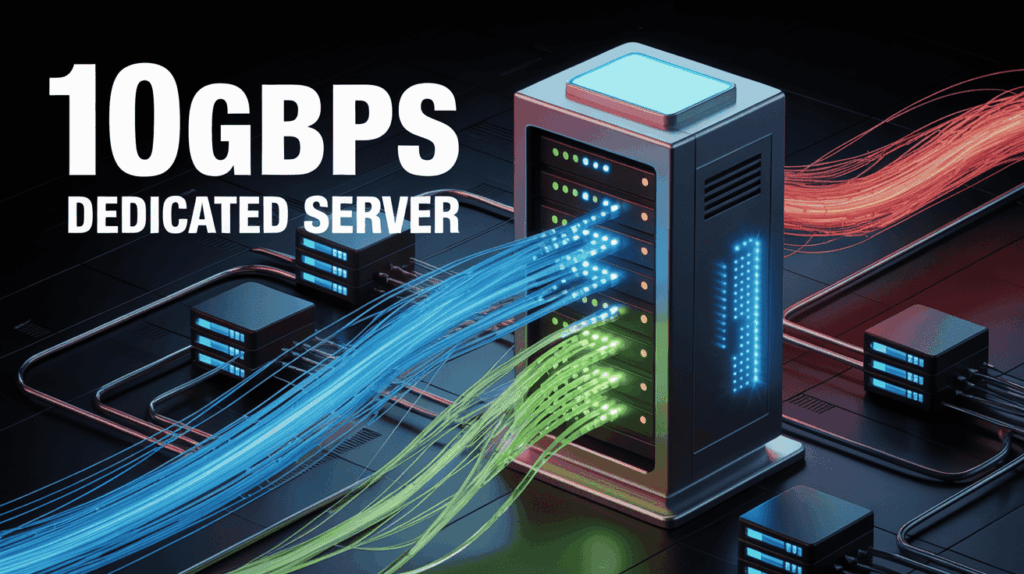
Unmetered 10Gbps Ports: From a Congested Dirt Road to a Private Data Superhighway
After more than 15 years working with high-bandwidth infrastructure, one thing has become very clear: network speed is no longer optional for modern workloads. Many businesses focus only on storage size or CPU power while ignoring the network itself — until slow transfers, buffering and unstable performance begin affecting users.
This is where a 10Gbps unmetered dedicated server completely changes the game.
The easiest way to understand the difference is through a road comparison.
A shared 1Gbps VPS connection is like a crowded dirt road filled with traffic. Everyone competes for limited space, congestion builds during peak hours, and data moves slowly.
A 10Gbps unmetered dedicated server is a private high-speed network built for nonstop heavy traffic.
At 10Gbps, servers can theoretically push around 1.25GB per second — nearly 10x faster than standard 1Gbps shared VPS.
This massive bandwidth advantage is critical for:
- Video streaming platforms
- Large cloud storage systems
- IPTV services
- Backup infrastructure
- CDN delivery
- AI workloads
- High-volume file transfers
In many VPS , slow bandwidth works together with a Storage VPS disk I/O bottleneck, creating severe delays during backups, streaming and large-scale transfers.
Bare-Metal Performance: Get 100% of Your Hardware Without Virtualization Limits
One of the biggest advantages of a high IOPS bare metal server is simple: you get full access to the hardware you are paying for.
After more than 15 years working with server infrastructure and performance optimization, I’ve seen many VPS lose speed because of virtualization overhead. Even powerful hardware are also slower than when a hypervisor sits between the operating system and the physical serverS.
In a VPS, the hypervisor manage many virtual machines on same hardware. Every request — whether it involves CPU processing, RAM allocation, disk access or network traffic — must pass through this virtualization layer first.
This creates:
- Additional latency
- Slower disk access
- Reduced throughput
- Shared CPU scheduling
- Resource contention
In simple terms, part of your server’s power is always being consumed by the virtualization system itself.
A high IOPS bare metal server removes that overhead completely.
There is:
- No hypervisor
- No virtual sharing
- No noisy neighbors
- No hidden resource throttling
Your operating system communicates directly with:
- Physical CPU cores
- Dedicated RAM
- NVMe storage
- RAID controllers
- Network interfaces
When paired with a 10Gbps unmetered dedicated server, businesses gain maximum performance, lower latency, and stable throughput without the limitations commonly found inside virtualized VPS environments or Storage VPS disk I/O bottleneck scenarios.
High IOPS Performance with Hardware RAID and NVMe Caching
One of the biggest advantages of a high IOPS bare metal server is storage flexibility. Unlike a Storage VPS, where the provider controls the disk setup, dedicated servers allow custom RAID configurations built for your exact workload.
After 15 years in hosting, I’ve seen many users struggle with a Storage VPS disk I/O bottleneck simply because shared storage cannot be tuned for performance.
With dedicated hardware, you can optimize for speed, redundancy or both.
Common RAID options include:
- RAID 0 – Maximum speed, no redundancy
- RAID 1 – Mirroring for data protection
- RAID 10 – High speed + redundancy (best for production)
- RAID 5/6 – Balanced storage capacity and protection
When paired with NVMe caching or full NVMe drives, performance increases dramatically for read/write heavy workloads.
Total Isolation & Offshore Privacy: Full Control Without Shared Hosting Limits
For many businesses, speed is only part of the decision. Privacy, control and infrastructure independence are just as important. That is where offshore dedicated hosting becomes a major advantage.
Unlike shared VPS environments, a high IOPS bare metal server gives you complete single-tenant isolation. No unknown users share your CPU, RAM, disks or network resources. This removes both performance issues and the risks often found in crowded multi-tenant systems.
After 15 years in hosting, I’ve seen many users leave VPS platforms not only because of a Storage VPS disk I/O bottleneck, but because they needed stronger control over their data and operations.
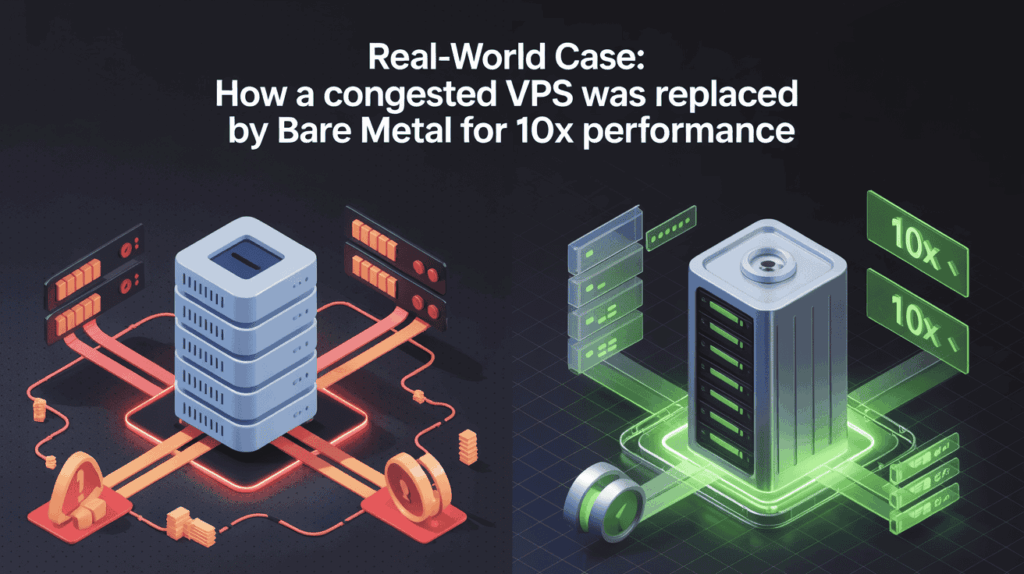
Real-World Case: How a Congested VPS Was Replaced by Bare Metal for 10x Performance
After 15 years working with hosting migrations and infrastructure upgrades, I can confidently say this: many businesses do not realize how much performance they are losing until they move off a crowded VPS node.
The following real-world style example is based on common scenarios we see across media, storage and streaming businesses. Names are anonymized, but the technical challenges are very real.
The Problem: A Media Agency Outgrew Its VPS Infrastructure
One anonymized client we worked with was a fast-growing media agency storing and streaming over 20TB of video content for client campaigns, archives and internal editing teams.
In the beginning, a Storage VPS seemed like the ideal solution. It offered large storage capacity at a low monthly price. But as traffic increased and more team members accessed files daily, the platform started failing under real demand.
They quickly ran into serious issues:
- Client preview videos buffering constantly
- Slow downloads of large media files
- Editors waiting on uploads to finish
- Nightly backups running into business hours
- Random lag spikes caused by a Storage VPS disk I/O bottleneck
- Shared 1Gbps port congestion during peak traffic
The team initially upgraded CPU and RAM, expecting performance to improve. It did not.
The real problem was shared storage IOPS and network contention — common limitations inside crowded VPS.
The Fix: Owrbit 10Gbps Dedicated Deployment
To remove the bottlenecks permanently, the client migrated from their overloaded Storage VPS to an Owrbit high IOPS bare metal server backed by a 10Gbps unmetered dedicated server connection.
The goal was simple: eliminate shared storage lag, remove network congestion and create a platform capable of handling large media traffic 24/7.
The Result: 10x Faster Speeds and Zero Downtime
After migrating to an Owrbit high IOPS bare metal server with a 10Gbps unmetered dedicated server uplink, the improvements were immediate and measurable.
The client’s previous Storage VPS struggled with shared resources and a constant Storage VPS disk I/O bottleneck. Once moved to dedicated hardware, those limitations disappeared.
Frequently Asked Questions (FAQ) :
Still comparing a Storage VPS with dedicated hosting? Below are the most searched questions people ask online about Storage VPS disk I/O bottleneck, high IOPS bare metal server, and 10Gbps unmetered dedicated server solutions—answered clearly by the Owrbit team to help you choose the right infrastructure.
What causes a Storage VPS disk I/O bottleneck?
A Storage VPS disk I/O bottleneck happens when too many users share the same storage drives and controllers. This leads to slow read/write speeds, delayed backups, lagging databases, and buffering. Owrbit dedicated servers solve this by providing dedicated disks and predictable performance.
When should I upgrade from a Storage VPS to a dedicated server?
You should upgrade when you notice:
- Slow backups
- Buffering streams
- Delayed downloads
- High I/O wait times
- Database lag
- Performance drops during peak hours
These are common signs that shared hosting limits are affecting your growth. Owrbit offers scalable upgrades with managed migration support.
Is a dedicated server faster than a VPS?
Yes. A dedicated server gives you full access to CPU, RAM, and storage hardware without sharing resources. This means faster speeds, lower latency, and stable uptime. Owrbit’s 10Gbps unmetered dedicated server plans are built for high-demand workloads.
What is a high IOPS bare metal server?
A high IOPS bare metal server is a physical server optimized for high read/write operations per second. It is ideal for databases, streaming, backups, cloud storage, and large applications. Owrbit offers high IOPS configurations with RAID and NVMe options.
What does 10Gbps unmetered dedicated server mean?
It means your server has a 10Gbps network port with no strict monthly bandwidth caps. This is ideal for:
- Large file transfers
- Media streaming
- Backup replication
- CDN traffic
- High-volume downloads
Owrbit provides enterprise-grade 10Gbps dedicated connectivity for growing businesses.
Why is my VPS slow during business hours?
Most VPS plans share network ports and storage nodes with multiple customers. During peak traffic times, congestion can reduce speed significantly. Moving to an Owrbit dedicated server removes shared bottlenecks.
Is bare metal better for streaming websites?
Yes. Streaming platforms need stable bandwidth and fast storage. A high IOPS bare metal server with a 10Gbps unmetered dedicated server connection delivers smoother playback, faster loading, and fewer buffering issues.
How much does it cost to upgrade from VPS to dedicated hosting?
Costs vary based on CPU, RAM, storage, and bandwidth needs. While dedicated servers cost more than VPS plans, they often save money long-term through better uptime, faster performance, and fewer upgrade headaches. Owrbit offers transparent pricing with multiple deployment options.
Does Owrbit offer managed migration from VPS to dedicated server?
Yes. Owrbit supports smooth migrations from Storage VPS or existing dedicated servers. Typical migrations include data transfer, website moves, database sync, and cutover planning with minimal downtime.
Can I use RAID storage on Owrbit dedicated servers?
Yes. Owrbit dedicated servers can be configured with RAID for speed, redundancy, or both. Popular options include RAID 1, RAID 10, and custom enterprise storage setups depending on your workload.
Is NVMe better than SSD for server hosting?
Yes. NVMe drives are significantly faster than standard SATA SSDs, especially for high-concurrency workloads. Owrbit offers NVMe-powered high IOPS servers for applications that need ultra-fast storage access.
Are dedicated servers better for backups?
Yes. Dedicated servers with large storage arrays and 10Gbps ports are ideal for backup storage, replication, and disaster recovery. Owrbit servers are commonly used for enterprise backup workloads.
Can shared VPS hosting affect SEO and user experience?
Yes. Slow page speed, downtime, and lag can harm user experience and search rankings. Faster dedicated hosting helps improve performance metrics, uptime, and customer retention.
Why choose Owrbit for dedicated servers?
Owrbit focuses on performance-driven infrastructure including:
- High IOPS bare metal servers
- 10Gbps unmetered dedicated server options
- Offshore hosting environments
- RAID and NVMe storage setups
- Managed migration assistance
- Scalable enterprise deployments
For businesses that have outgrown shared VPS hosting, Owrbit offers a practical path to reliable dedicated performance.
Is offshore dedicated hosting safe and reliable?
Yes. Quality offshore infrastructure can provide strong uptime, privacy benefits, and dedicated resource isolation. Owrbit combines offshore hosting flexibility with enterprise hardware and fast global connectivity.
How do I know if my server has a disk bottleneck?
Common signs include:
- High I/O wait time
- Slow file access
- Delayed backups
- Database lag
- CPU idle while apps feel slow
These often point to a Storage VPS disk I/O bottleneck.
What workloads need dedicated servers most?
Dedicated servers are best for:
- Streaming platforms
- SaaS applications
- Cloud storage
- Gaming backends
- Backup servers
- AI workloads
- Large databases
- Media delivery systems
Owrbit helps businesses match the right hardware to each workload.
If you’re experiencing slow VPS performance, shared resource issues, or growing traffic demands, it may be time to upgrade. Owrbit delivers reliable high IOPS bare metal server solutions and 10Gbps unmetered dedicated server plans built for businesses that are ready to scale with confidence.
Last Verdict: Stop Sharing Resources, Start Scaling Like a Pro
After 15 years of working with hosting infrastructure, migrations and performance troubleshooting, I can summarize this topic in one clear sentence:
Virtual servers are excellent for starting. Dedicated servers are built for scaling.
A Storage VPS can be useful when budgets are tight and workloads are light. But once your business depends on fast backups, smooth streaming, database speed, large file transfers, and consistent uptime, shared infrastructure becomes a limitation.
That is when users begin facing:
- Slow file access
- Random lag spikes
- Shared bandwidth congestion
- Unstable peak-hour performance
- Recurring Storage VPS disk I/O bottleneck issues
- Constant upgrades with little real improvement
At that stage, staying on a VPS often costs more in lost time and poor user experience than upgrading.
Discover more from Owrbit
Subscribe to get the latest posts sent to your email.