

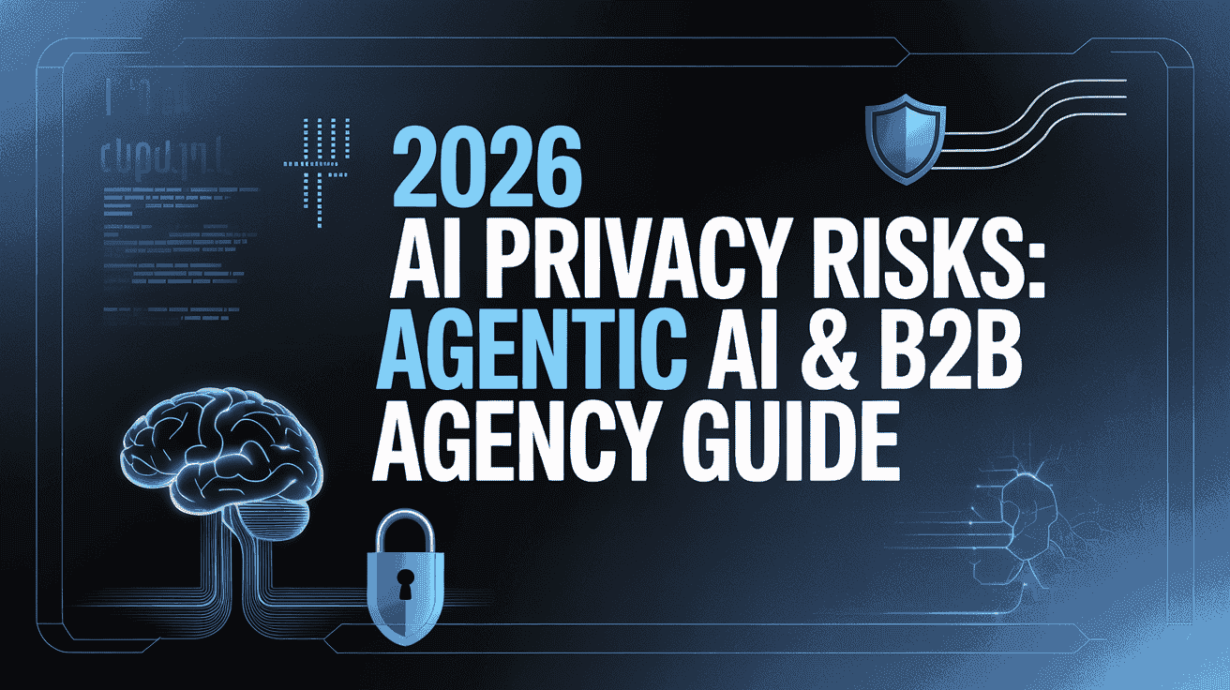
AI is no longer just a tool that predicts outcomes—it now acts on its own. In 2026, businesses are rapidly adopting systems that can move data between apps, trigger workflows, and make decisions without constant human input. While this unlocks speed and efficiency, it also introduces a new level of AI Privacy Risks that many companies are not fully prepared for. Sensitive business data can now flow across tools, APIs, and third-party platforms automatically—sometimes without clear visibility or control.
This shift has created serious concerns around agentic AI data privacy risks. These systems don’t just process data—they remember it, reuse it, and share it across different contexts. That means customer information, internal documents, or even proprietary code can end up in places it was never meant to go. At the same time, many businesses are struggling with shadow AI risks for agencies, where employees unknowingly expose data by using public AI tools for daily tasks. Without proper safeguards, even trusted workflows can turn into hidden privacy gaps.
This guide is built to help B2B leaders, agencies, and IT teams take control. We’ll break down what’s actually changing, where the biggest risks are, and how to handle B2B AI vendor due diligence the right way. More importantly, you’ll learn how to protect your data while still using AI to grow your business—so you can move forward with confidence instead of hesitation.
The New Reality of AI Privacy Risks in 2026 :
The days of simple chatbots are over. In 2026, AI is deeply connected to business systems—moving data between CRMs, analytics tools, internal dashboards and server environments without constant human input. This shift has significantly increased AI Privacy Risks especially for B2B companies handling sensitive client and operational data. It’s no longer just about storing information securely—it’s about understanding how AI systems access, use and share that data across your entire infrastructure.
What makes this new reality challenging is how autonomous these systems have become. With growing agentic AI data privacy risks, AI doesn’t just respond—it acts. It can trigger workflows, reuse stored data and pass information between tools in ways that are difficult to track. Traditional security methods like firewalls and access controls were never designed for this level of automation, which means many businesses are operating with blind spots they don’t even realize exist.
How the 2026 EU AI Act Impacts Global B2B Vendors :
AI privacy is no longer just a technical issue—it’s now a strict legal requirement. The 2026 EU AI Act has made it clear that any business using AI to process data must be able to explain, control and justify how that data is handled. This applies not only to companies within Europe but also to any B2B organization working with EU clients or partners.
For businesses, this means a major shift toward accountability. Companies must now perform proper B2B AI vendor due diligence before working with agencies, SaaS platforms or hosting providers. It’s no longer enough to trust a vendor—you need clear proof of how their AI systems operate, how data is processed and whether any third-party models are involved.
This regulation is also pushing companies to rethink internal risks, including shadow AI risks for agencies. Employees using unapproved AI tools can unknowingly violate compliance rules by exposing sensitive data. As a result, businesses must combine strong internal policies with careful vendor selection to stay compliant.
The bottom line is simple: in 2026, AI privacy is directly tied to business trust, legal safety, and long-term growth. Companies that take it seriously will have a clear advantage, while those that ignore it will face increasing risk.
4 Critical AI Privacy Risks Every B2B Business Must Address in 2026 :
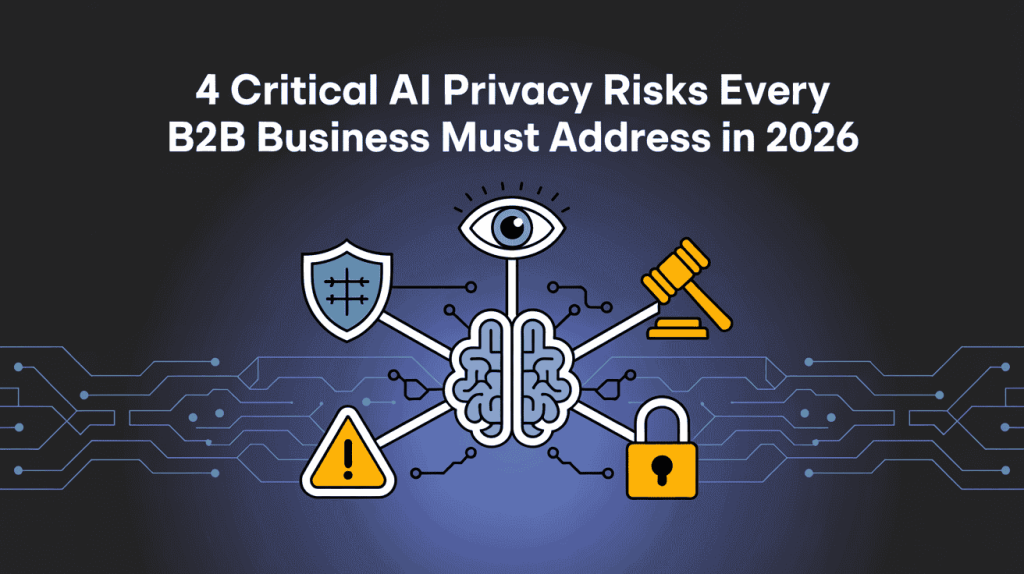
AI is now deeply embedded in how agencies and enterprises operate—but with that power comes serious responsibility. The biggest AI Privacy Risks today are not obvious system failures but hidden data exposure happening across tools, teams and vendors. Below are the four most critical risks that every business must understand and control.
1. Agentic AI Data Privacy Risks (The Hidden Threat) :
One of the biggest shifts in 2026 is the rise of autonomous AI systems. These are not passive tools—they actively interact with your business environment.

With growing agentic AI data privacy risks, AI can:
- Pull customer data from your CRM
- Process it inside internal tools or dashboards
- Send outputs to third-party apps or APIs
- Store or reuse that data for future tasks
All of this can happen without direct human approval.
The real danger lies in untracked data movement. Sensitive information—like client records, financial insights, or internal reports—can quietly flow across systems, creating exposure points you didn’t plan for.
Key concern: You may secure your database, but not the AI that moves data out of it.
2. The “Shadow AI” Epidemic in the Workplace :
While businesses focus on external threats, one of the biggest risks is internal.
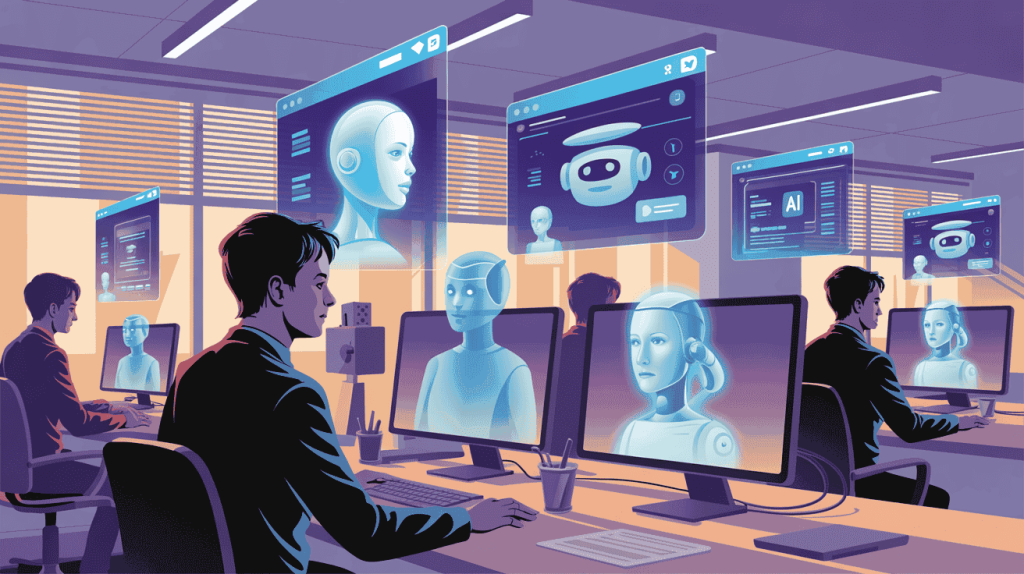
Shadow AI risks for agencies are growing fast. Employees often use public AI tools to:
- Write code snippets
- Generate marketing content
- Analyze reports or datasets
- Fix bugs or troubleshoot systems
This isn’t just a theoretical risk. According to recent tech forecasts, the financial and operational impact of this internal data leakage is staggering.
As Arun Chandrasekaran, Distinguished VP Analyst at Gartner, recently warned: “By 2030, more than 40% of global organizations will suffer security and compliance incidents due to the use of unauthorized AI tools.”
But in doing so, they may unknowingly upload:
- Proprietary client data
- Internal business strategies
- Confidential source code
This creates a major privacy gap because these tools may:
- Store prompts and inputs
- Use data for model training
- Share data across systems without clear visibility
Why this matters: Even a single employee action can expose high-value business data outside your control.
3. Third-Party Web Tools and Plugin Integrations :
Modern websites and applications rely heavily on third-party tools—analytics, chat widgets, CRMs, tracking scripts and plugins. But many businesses don’t realize how these tools interact with AI behind the scenes.
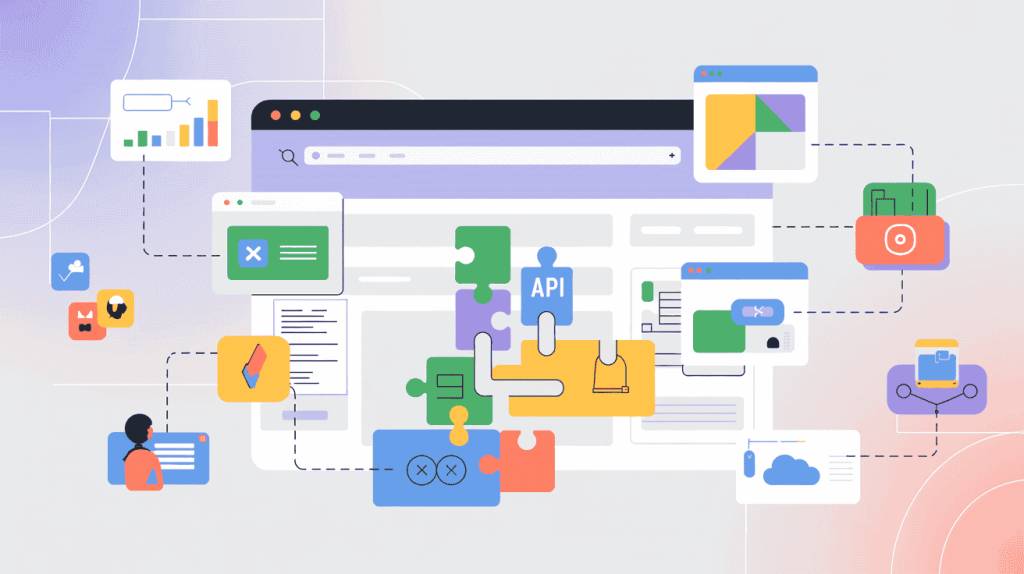
Some tools may:
- Collect user and behavioral data
- Send that data to external servers
- Use it to train or improve AI models
- Share it with additional subprocessors
This creates silent data pipelines that bypass your internal security controls.
Common risk areas include:
- Website plugins with hidden AI features
- Marketing automation tools
- Customer support chat systems
- External APIs connected to your backend
Without proper audits, these integrations can introduce serious AI Privacy Risks into your infrastructure.
4. Failing B2B AI Vendor Due Diligence :
In 2026, trust is no longer enough. Businesses must verify how their partners handle data—especially when AI is involved.
This is where B2B AI vendor due diligence becomes critical.
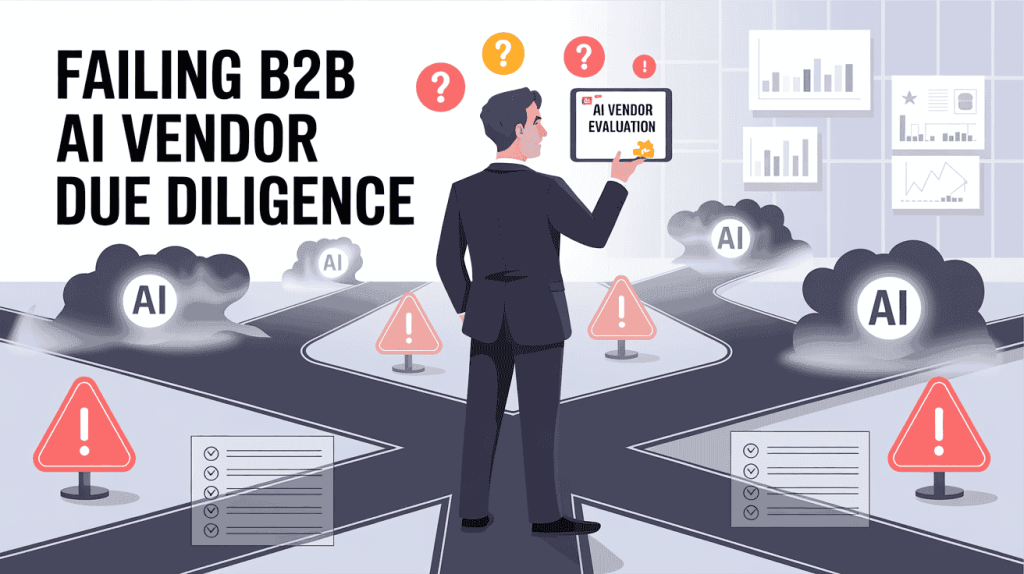
Enterprise clients now expect clear answers to questions like:
- Is any client data used to train AI models?
- Are you using zero-retention or private AI APIs?
- Who are your subprocessors or AI partners?
- How is data stored, processed, and isolated?
This has led to the rise of “AI Dossiers”—detailed documentation that proves:
- Data handling practices
- AI system architecture
- Privacy safeguards and compliance measures
The risk of ignoring this: Working with the wrong vendor can expose your entire data ecosystem—not just one system.
What This Means for Your Business :
These risks are not theoretical—they are already impacting agencies and enterprises worldwide. The combination of automation, third-party tools and human behavior has created a complex privacy environment.
To stay protected, businesses must:
- Monitor how AI interacts with their data—not just where data is stored
- Control internal usage to reduce shadow AI risks for agencies
- Audit every external tool and integration carefully
- Strengthen B2B AI vendor due diligence with clear documentation and proof
AI can drive massive growth—but without the right controls, it can also become your biggest privacy liability.
How to Protect Your Business Data from AI Leaks in 2026 :
Understanding the risks is only half the battle—the real advantage comes from knowing how to control them. As AI becomes more integrated into business workflows, companies must shift from reactive security to proactive data protection strategies. The goal is simple: keep sensitive data within controlled environments while still benefiting from AI-driven efficiency.
Below are two of the most effective ways B2B organizations can reduce AI Privacy Risks and build a secure foundation for growth.

Isolating Data with Dedicated Server Environments :
One of the most reliable ways to prevent data leaks is by moving away from shared hosting and public infrastructure. In shared environments, your data often sits alongside other users, increasing the chances of unintended exposure—especially when AI systems are involved.
Dedicated servers create a fully isolated environment, giving you complete control over:
- Where your data is stored
- How it is accessed
- Which systems can interact with it
This becomes critical when dealing with agentic AI data privacy risks, where AI systems may automatically move data between tools. With a dedicated setup, you can tightly control these interactions and prevent unauthorized data flow.
Why this matters:
- No shared resources = lower exposure risk
- Better control over AI integrations and APIs
- Stronger compliance with regulations like the EU AI Act
- Reduced chances of data being scraped or reused by external systems
For businesses serious about privacy and performance, providers like Owrbit are increasingly preferred for AI-focused infrastructure. Their dedicated server solutions are designed for high-security workloads making them a strong choice for companies looking to run AI systems without exposing sensitive data.
Using Zero-Retention APIs for Secure Web Development :
Another critical step is choosing the right tools when building websites, apps, or AI-powered systems. Not all APIs handle data the same way—some store requests, logs or inputs, which can later be used for training or analysis.
Zero-retention APIs solve this problem by ensuring:
- Data is processed in real time
- No logs or inputs are stored after execution
- No data is reused for model training
This is especially important for businesses handling:
- Client databases
- Financial information
- Internal communications
- Proprietary code
By integrating zero-retention APIs into your development workflow, you significantly reduce AI Privacy Risks and eliminate hidden data exposure.
Best practices to follow:
- Always verify API data policies before integration
- Avoid tools that store prompts or request logs
- Combine APIs with secure server environments
- Regularly audit how data flows through your systems
Building a Privacy-First AI Infrastructure :
Securing your business in 2026 is not about avoiding AI—it’s about using it responsibly. By combining dedicated server environments with zero-retention technologies, businesses can maintain full control over their data while still leveraging advanced AI capabilities.
Companies that take this approach don’t just reduce risk—they position themselves as trusted, privacy-first partners in an increasingly data-sensitive world.
Case Study: What the Samsung Data Leak Taught Businesses
One of the most well-known real-life examples of shadow AI risks for agencies and enterprises comes from Samsung. In 2023, several Samsung engineers unintentionally exposed highly sensitive company data while using ChatGPT for routine work tasks. They weren’t trying to leak data—they were simply trying to work faster.
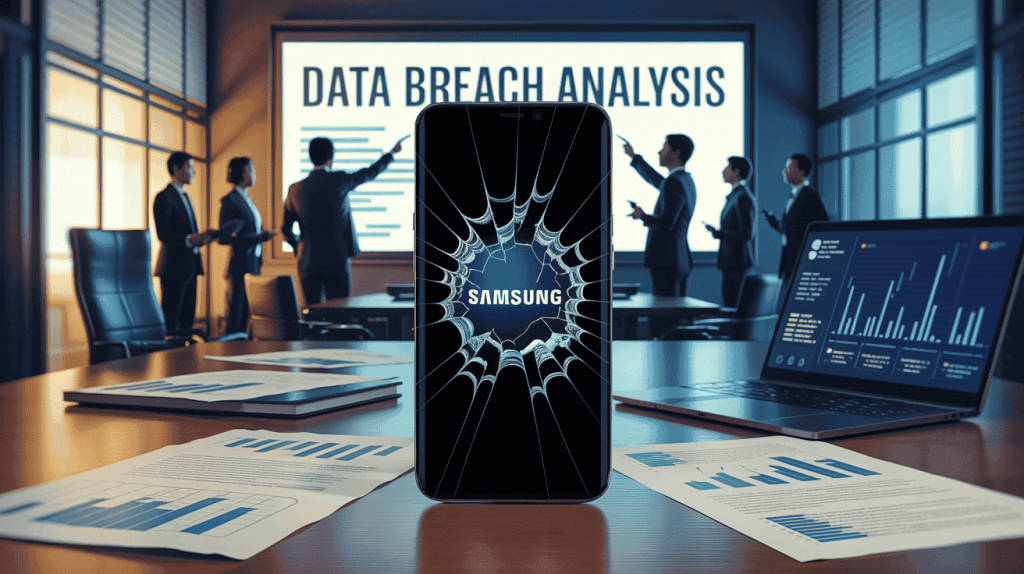
What Actually Happened :
Samsung employees used ChatGPT to:
- Debug internal source code
- Summarize confidential meeting notes
- Optimize database queries
To do this, they pasted proprietary information directly into the AI tool.
The problem?
That data was sent to an external AI system, outside Samsung’s secure environment.
Why This Became a Serious AI Privacy Risk :
At the time, public AI tools did not guarantee strict data isolation. This created multiple risks:
- Sensitive code and internal data left company-controlled systems
- Inputs could potentially be stored or reviewed for model improvement
- There was no clear visibility on where the data went or how it was handled
Even though there was no malicious intent, the incident exposed a major gap in internal AI governance.
The Fallout :
Once Samsung identified the issue, the response was immediate:
- Banned the use of public AI tools across internal teams
- Strengthened internal data security policies
- Began reviewing how employees interact with AI systems
- Accelerated efforts toward secure, private AI alternatives
This incident made it clear that employees using AI without proper controls can create the same level of risk as external threats.
Key Lesson for B2B Businesses :
The Samsung case highlights a critical reality:
AI Privacy Risks are not always external—they often come from within.
Without clear policies and safeguards:
- Employees may unknowingly expose client or company data
- Public AI tools can become unmonitored data channels
- Compliance risks increase significantly
What Businesses Must Do Differently
To avoid similar incidents, companies must take a structured approach:
- Establish strict internal AI usage policies
- Limit or monitor access to public AI tools
- Train employees on data handling risks
- Implement secure alternatives for AI workflows
- Strengthen B2B AI vendor due diligence to ensure safe integrations
The Samsung incident wasn’t caused by hackers—it was caused by a lack of awareness and control.
That’s what makes shadow AI risks for agencies and enterprises so dangerous. They are silent, unintentional, and often invisible until it’s too late.
For modern B2B organizations, the takeaway is simple:
If you don’t control how AI is used inside your business, you don’t control your data.
The Most Secure Approach: Build & Host Your Own Private AI
Relying on public AI models is no longer the only option—and for many businesses, it’s no longer the safest one. In 2026, companies are shifting toward private AI environments where they control exactly how data is processed, stored and used.
The reason is simple: every time you send data to a public AI API, that data leaves your infrastructure. With rising AI Privacy Risks, this creates exposure that’s difficult to track or control.
Private AI changes that completely.
Instead of depending on external providers, businesses can now run AI systems on their own infrastructure—giving them full ownership of data, workflows and compliance. This approach is quickly becoming the gold standard for enterprises handling sensitive information.
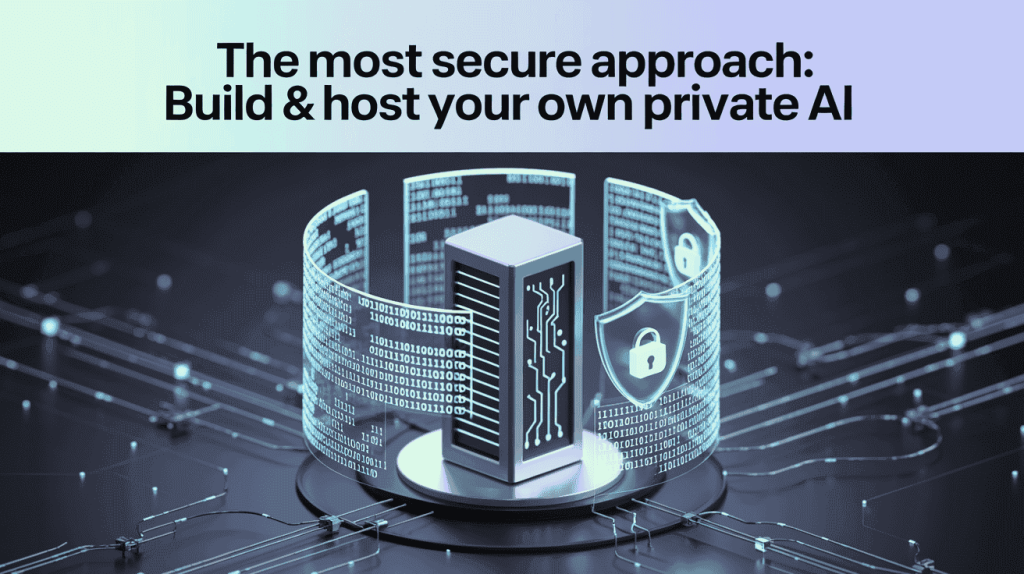
Deploying Open-Source AI Models on Private Infrastructure :
Modern open-source AI models have become powerful enough to run inside your own environment. This means you no longer need to rely on third-party APIs to use advanced AI capabilities.
When you deploy AI on your own infrastructure:
- Your data never leaves your servers
- No external provider can access or store your inputs
- You eliminate the risk of data being used for model training
- You gain complete control over how AI interacts with your systems
In simple terms: your server = your data = your control
For companies looking to implement this securely, infrastructure matters. Using high-performance, isolated environments is critical—and this is where providers like Owrbit stand out. Their AI dedicated servers are designed for private AI workloads, giving businesses the control and performance needed to run AI systems without exposing data externally.
What This Means for Agencies and Enterprises :
The shift toward private AI is not just a technical upgrade—it’s a strategic move.
Businesses that adopt this approach:
- Gain full control over AI data flows
- Reduce AI Privacy Risks significantly
- Strengthen trust with clients and partners
- Stay ahead of compliance requirements
At the same time, this creates a clear expectation:
clients will increasingly choose agencies and hosting providers that can offer secure, private AI infrastructure.
Final Takeaway :
The future of AI is not just smarter models—it’s smarter ownership of data.
Public AI tools may still be useful, but for serious B2B operations, private AI is becoming the standard. Running AI on dedicated infrastructure ensures that your business remains in control, compliant, and protected.
If you’re planning to move in this direction, it’s worth exploring a deeper technical breakdown here:
👉 https://owrbit.com/hub/host-your-own-private-ai-on-dedicated-server/
Because in 2026, the safest AI is not the one you use—
it’s the one you fully control.
Frequently Asked Questions (FAQs) :
Got questions about AI privacy and how it impacts your business in 2026? Here are clear, practical answers to the most common concerns B2B companies and agencies are searching for right now.
What are agentic AI data privacy risks?
Agentic AI data privacy risks refer to AI systems that can act independently—moving data between tools, triggering workflows, and making decisions without constant human oversight.
This creates risks such as:
- Uncontrolled data sharing across platforms
- Use of sensitive information in unintended contexts
- Difficulty tracking how and where data is used
Businesses must monitor and restrict how these systems interact with internal and external tools.
What is “Shadow AI” and why is it dangerous for agencies?
Shadow AI refers to employees using public AI tools without approval. This is one of the fastest-growing AI Privacy Risks.
It becomes dangerous when employees:
- Paste client data into AI tools
- Upload proprietary code or internal documents
- Use AI tools that store or reuse input data
Even a single action can expose sensitive business information. Companies need clear internal policies and secure alternatives to prevent this.
How can businesses prevent AI from leaking sensitive data?
Businesses can reduce AI Privacy Risks by:
- Using dedicated server environments instead of shared hosting
- Choosing zero-retention APIs that don’t store data
- Restricting access to public AI tools
- Monitoring how data flows across systems
Many companies are also moving toward private AI infrastructure to keep all data within controlled environments.
What is B2B AI vendor due diligence?
B2B AI vendor due diligence is the process of evaluating how a vendor handles data when using AI.
Before working with any provider, businesses should ask:
- Is my data used for training AI models?
- Do you store or log any inputs?
- Who are your subprocessors?
- Can you provide proof of compliance and data handling?
This process helps ensure your data is not exposed through third-party tools or services.
What is an AI Dossier and why is it important?
An AI Dossier is a detailed document that explains how a company or vendor uses AI and handles data.
It typically includes:
- Data processing policies
- AI system architecture
- Security and compliance measures
- Third-party integrations
In 2026, many enterprises require AI Dossiers before working with agencies or service providers.
How does the EU AI Act affect businesses outside Europe?
The EU AI Act applies to any business that handles data of EU users or works with EU-based clients.
This means even non-EU companies must:
- Follow strict data handling rules
- Maintain transparency in AI usage
- Ensure compliance across vendors and tools
Failing to comply can result in legal and financial consequences.
Is using public AI tools like ChatGPT safe for business data?
Public AI tools can be useful, but they carry risks if used without control.
Potential issues include:
- Data being stored or logged
- Lack of full transparency on data usage
- Exposure of sensitive business information
For critical operations, businesses should consider private or controlled AI environments instead of relying entirely on public tools.
What is the safest way to use AI in a business environment?
The safest approach is to combine:
- Private AI infrastructure
- Dedicated servers with full control
- Zero-retention APIs
- Strict internal usage policies
This setup ensures that data remains secure while still allowing businesses to benefit from AI.
Why are dedicated servers better for AI privacy?
Dedicated servers provide complete isolation, meaning your data is not shared with other users or environments.
This helps:
- Prevent unauthorized data access
- Control how AI systems interact with your data
- Reduce exposure from third-party systems
For businesses handling sensitive workloads, dedicated infrastructure is one of the most effective ways to minimize AI Privacy Risks. Providers like Owrbit offer environments specifically designed for secure, AI-driven operations.
Should businesses host their own private AI?
Yes, many businesses are moving toward private AI to gain full control over their data.
Benefits include:
- No data sent to external AI providers
- Full ownership of data and workflows
- Better compliance with regulations
- Reduced reliance on third-party vendors
This approach is becoming the preferred choice for agencies and enterprises handling sensitive information.
How can agencies prove they are safe to work with regarding AI?
Agencies must go beyond basic promises and provide clear proof of their practices.
This includes:
- Transparent AI usage policies
- AI Dossiers for clients
- Secure infrastructure and hosting
- Strong B2B AI vendor due diligence processes
Agencies that invest in secure hosting and controlled AI environments naturally build more trust with clients.
What should I look for in a secure AI hosting provider?
When choosing a provider, look for:
- Dedicated server environments
- Strong data isolation and privacy controls
- Support for private AI deployments
- Transparent data handling policies
A reliable provider should help you maintain full control over your data while supporting AI workloads securely—something businesses increasingly prioritize when selecting infrastructure partners.
If you’re serious about protecting your business data while using AI, choosing the right infrastructure and partners makes all the difference—privacy, control, and trust start with where and how your systems are built.
Conclusion: Partnering with a Secure, Privacy-First Web Agency
AI is transforming how businesses operate—but it’s also redefining how data must be protected. In 2026, managing AI Privacy Risks is no longer optional. From agentic systems moving data across platforms to growing shadow AI risks for agencies, the only way forward is with strong control, clear policies and secure infrastructure.
The reality is simple: businesses that rely on shared environments, unverified tools or unclear vendor practices will continue to face hidden risks. On the other hand, companies that invest in dedicated hosting, private AI environments and strict B2B AI vendor due diligence will not only stay compliant—but also build stronger trust with clients and partners.
This is where working with the right infrastructure partner becomes critical. A privacy-first approach—built on isolated servers, controlled data flow, and secure AI deployment—is what separates modern, secure businesses from vulnerable ones.
If you’re planning to integrate AI into your operations or want to secure your existing systems, now is the time to act.
👉 Explore Owrbit AI Dedicated Servers to run your AI workloads in a fully controlled, private environment
👉 Get in touch for a personalized infrastructure audit and see how your current setup can be secured for 2026 and beyond
Because in today’s AI-driven world, security isn’t just a feature—it’s the foundation of your business.
Discover more from Owrbit
Subscribe to get the latest posts sent to your email.