



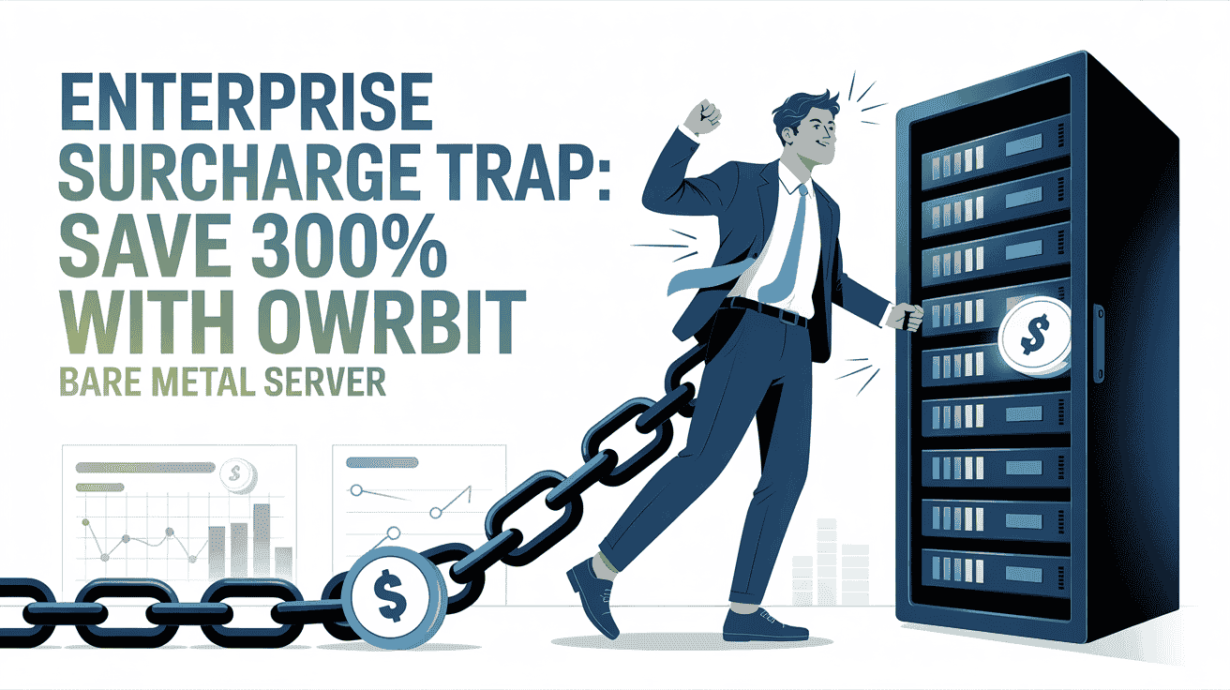
Most companies today are overpaying for servers without realizing it. The enterprise surcharge is built into modern cloud pricing through layered markups, paid support, and especially hidden cloud egress fees 2026 that only appear after your traffic grows. You don’t feel it on day one — you feel it when the invoice suddenly doubles.
This is why so many teams end up searching for a bare metal vs aws ec2 cost comparison after they scale. On paper, AWS looks cheap. In reality, once you add bandwidth, storage IOPS, and data transfer, it becomes one of the most expensive ways to run steady workloads.
Owrbit Bare-Metal removes that entire trap. You get the full physical server, not a virtual slice. There is no hypervisor tax, no noisy neighbors, and no hidden cloud egress fees 2026 waiting to punish growth. In any real bare metal vs aws ec2 cost comparison, dedicated hardware with flat-rate bandwidth wins for databases, AI, streaming, and analytics.
If you want raw performance and predictable bills, the cloud brand tax no longer makes sense.
Why “Unlimited” Cloud Is a Lie
The real difference between vCPU slices and physical cores
Cloud platforms love to talk about unlimited compute. What they never say clearly is that you are not renting a CPU — you are renting time on one.
In a bare metal vs aws ec2 cost comparison, this is where everything starts to break down.
Checkout Stop Data Leak: Host Your Own Private AI on Dedicated Server
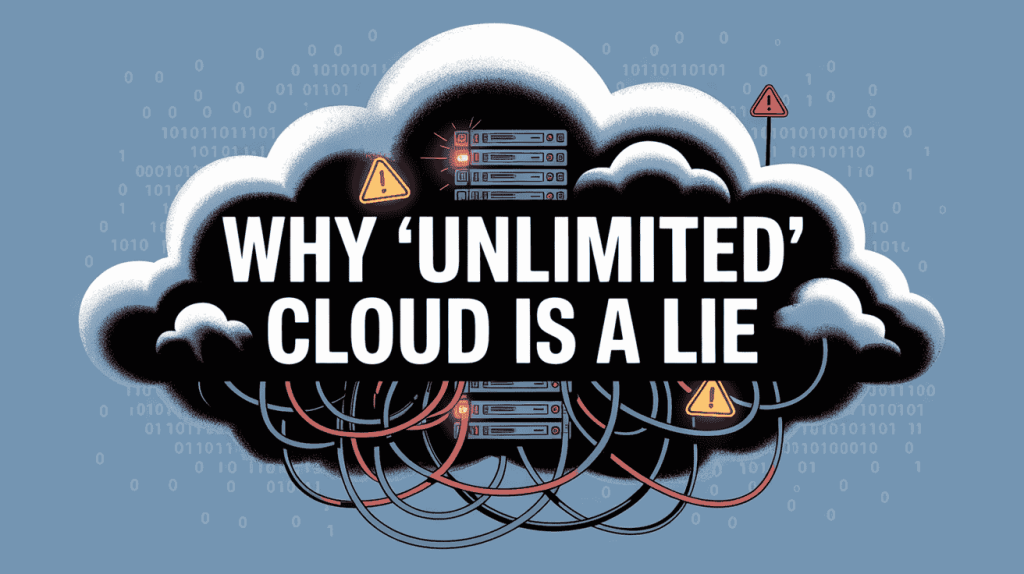
A vCPU is not a real processor core. It is a scheduling unit created by a hypervisor. Your workload only runs when the hypervisor allows it to. If another customer on the same physical machine suddenly becomes busy, your application waits. You still get billed for the time — even when your code is paused.
Bare metal works the opposite way. When you are assigned eight cores, those are eight physical cores on a real CPU that belong only to you. There is no scheduler negotiating between tenants. No one can steal your cycles. The clock speed you see is the clock speed you get.
This is why two machines with the same “8-core” label behave so differently.
vCPU vs Physical CPU Core :
| What matters | Virtualized cloud (vCPU) | Owrbit Bare Metal |
|---|---|---|
| What you get | Time slice on shared CPU | Physical CPU core |
| Who controls scheduling | Hypervisor | You |
| Noisy neighbors | Always | Never |
| Sustained performance | Drops under load | Flat and stable |
| Latency | Jittery | Predictable |
| What you are billed for | Reserved time | Real hardware |
In every real bare metal vs aws ec2 cost comparison, this is why cloud feels slower even when it looks powerful on paper. The hardware is real — but it is never fully yours.
The Bandwidth Trap: How Hidden Cloud Egress Fees Turn Traffic into a Liability
In the cloud, storing data is cheap. Moving it is not.
This is where hidden cloud egress fees 2026 do the real damage. AWS and Azure charge you every time your data leaves their network. It does not matter if you are serving a website, streaming a video, syncing backups, or sending API responses — every gigabyte out is metered and billed.
At first it looks harmless. A few cents per GB feels small. But once traffic grows, the math becomes brutal.
If your app sends out 10 TB of data in a month, you are not paying for servers anymore. You are paying a toll. That same traffic on AWS can cost more than the compute that produced it. This is why so many teams get shocked by their bill after they scale — the workload did not change, only the egress did.
This is why every honest bare metal vs aws ec2 cost comparison must include bandwidth. Cloud platforms are cheap to enter and expensive to leave.
Owrbit removes this entire trap. With flat-rate data transfer, your traffic is not a risk. You can grow users, stream media, and move backups without watching a meter. There are no hidden cloud egress fees 2026 waiting to punish success — just predictable cost and real servers doing real work.
How CPU Steal Time Is Slowing Down Your Cloud Server :
When people say their VPS feels fast one moment and slow the next, they are usually hitting a problem called CPU steal time.
In a virtualized cloud, your server does not own the CPU. It shares a physical processor with many other customers. When one of them suddenly uses a lot of compute, the hypervisor takes time away from your machine and gives it to them. Your code is ready to run — but it is forced to wait.
That waiting is called steal time, shown as %st in Linux.
You can see it yourself:
topLook at the CPU line. If %st is not zero, your server is being slowed down by neighbors you do not control.
This is why cloud workloads stutter during peak hours. Traffic is high, other tenants are busy, and the hypervisor starts reshuffling CPU time.
In every real bare metal vs aws ec2 cost comparison, this is where bare metal wins. On Owrbit, the CPU is physically yours. There is no hypervisor and no scheduler stealing cycles. %st stays at 0.00 because there are no neighbors to compete with.
You get raw, predictable compute — not whatever is left over.
How “Setup Charges” Are Used to Lock You into Expensive Hosting
When you try to order a dedicated server from most large providers, you will see a strange line on the invoice: setup fee. Sometimes it is $50. Sometimes $150. Sometimes more. They tell you it is for provisioning, installation, or hardware preparation.
In reality, nothing special is happening.
Modern servers are deployed by automation. A technician does not sit there building your machine by hand. The setup fee exists for one reason only: to make leaving expensive.
Once you have paid a large upfront charge, you feel pressured to stay for months just to “get your money’s worth.” This is how providers push customers into long contracts and overpriced plans.
This becomes even worse when combined with hidden cloud egress fees 2026. You pay to get in, then you pay again every time your data leaves.
In every serious bare metal vs aws ec2 cost comparison, this is another quiet tax that never shows up in the headline price.
Owrbit removes this entire trick. There is no setup fee. You are not punished for trying the service. You can deploy, test, and move workloads without paying a toll just to start. You stay because the performance and pricing make sense — not because a fee is holding you hostage.
When You Run the Math: Bare Metal vs AWS EC2 Cost Comparison
| What you actually pay for | AWS EC2 / Cloud | Owrbit Bare-Metal |
|---|---|---|
| CPU | Shared vCPUs (performance depends on neighbors) | Physical cores (100% yours) |
| CPU performance | Jittery, burst-based | Flat, full clock speed |
| CPU steal time | Common (%st > 0) | 0% steal time |
| Storage IOPS | Metered and capped | Raw disk speed |
| Data transfer out | Charged per GB | Flat-rate |
| Traffic spikes | Trigger higher bills | No cost change |
| Hidden cloud egress fees 2026 | Yes — core business model | None |
| Predictable monthly cost | No | Yes |
| Scaling users | Gets more expensive | Gets more efficient |
This is why every serious bare metal vs aws ec2 cost comparison ends the same way:
Cloud is priced for uncertainty. Bare metal is priced for reality.
On AWS, the more traffic you get, the more you pay in hidden cloud egress fees 2026.
On Owrbit, traffic is not a liability — it is just your server doing its job.
That difference is why teams that run real workloads stop renting virtual slices and start owning hardware.
Why Owrbit Bare Metal Exists: Real Hardware Without the Enterprise Tax
Most “premium” infrastructure companies are not selling better servers. They are selling complicated billing.
The hardware underneath AWS, Azure, Hetzner, and OVH is the same type of Intel and AMD silicon that everyone else uses. What makes them expensive is not the CPU — it is the layers of markup, virtualization, and usage-based fees built on top of it.
Checkout Find the Ideal Dedicated Server Specs for Speed, Security & Growth
Owrbit exists to remove that entire stack.
Instead of renting you a virtual slice of a shared machine, Owrbit gives you the whole physical server. The CPU, RAM, disk, and network ports are yours and only yours. There is no hypervisor stealing cycles, no neighbors slowing you down, and no billing model that charges you more when your traffic grows.
This is why engineers who run databases, IPTV platforms, file hosting, AI inference, game servers, and media delivery keep running a bare metal vs aws ec2 cost comparison. They want predictable performance and predictable bills — not elastic invoices and hidden cloud egress fees 2026.
Owrbit’s philosophy is simple:
If you are paying for hardware, you should actually get hardware.
Not time slices, not burst credits, and not surprise charges.
That is what bare metal was always supposed to mean.
No Surprises, No Traps: How Owrbit Makes Server Pricing Finally Make Sense
One of the biggest reasons companies stay stuck in the cloud is fear. Fear of migrating. Fear of breaking things. And fear of what the next bill will look like.
That fear exists because cloud pricing is designed to be unpredictable.
With AWS and similar platforms, you are not buying a server. You are buying a meter. CPU hours, storage IOPS, and especially hidden cloud egress fees 2026 are all counted, tracked, and billed separately. A traffic spike, a backup job, or a new user base can turn into a financial problem overnight.
This is why so many teams end up running a bare metal vs aws ec2 cost comparison after they scale. They are not slow — they are shocked.
Owrbit uses a completely different model. You pay for the physical server and the bandwidth, and that is it. There is ₹0 setup fee. There are no usage meters quietly running in the background. You know your cost up front and it does not change just because your app gets popular.
That predictability is not a luxury. It is how real infrastructure should work.
Case Study: How One High-Traffic Platform Cut Its Hosting Costs by 70% by Leaving the Cloud
To understand why engineers keep running a bare metal vs aws ec2 cost comparison, let’s look at a real-world style scenario that mirrors what many teams are going through right now.
A mid-size media platform — let’s call it StreamForge — was running on AWS EC2. They had a few million monthly users, a growing video library, and APIs serving content around the clock. On paper, their setup looked reasonable: multiple EC2 instances, object storage, and a CDN in front.
The problem was not compute. It was bandwidth.
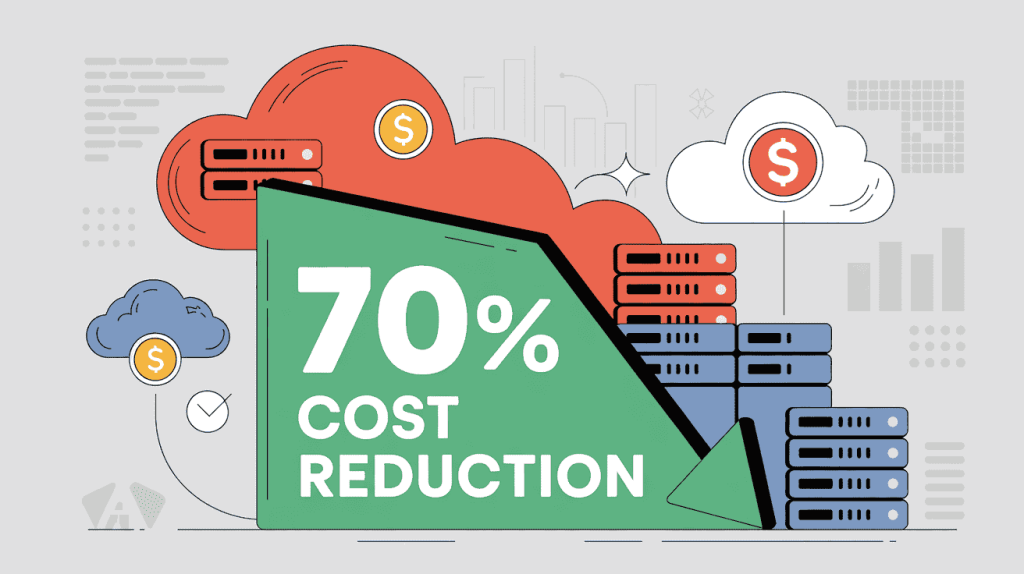
Every time users watched a video, AWS charged for the data leaving their network. By early 2026, hidden cloud egress fees 2026 had become their largest expense. Their monthly cloud bill had grown to over ₹11 lakh, and more than half of it was just data transfer.
They decided to test Owrbit Bare-Metal.
They moved their media servers and APIs to two dedicated Owrbit machines. Same traffic. Same users. No code changes. The difference was that bandwidth was flat-rate and the CPU was no longer shared.
The result:
- AWS monthly cost: ~₹11,00,000
- Owrbit monthly cost: ~₹3,20,000
That is nearly 70% savings in a direct bare metal vs aws ec2 cost comparison — with better performance and zero surprise bills.
They didn’t change their product.
They changed the business model under it.
Who Should Not Be on the Cloud Anymore (and Who Still Should) :
Cloud is not useless. It is just badly used. The problem starts when companies keep paying cloud prices for workloads that should never be there.
Here is the simple split.
Cloud still makes sense if you are:
- Testing new ideas
- Running short-lived jobs
- Spinning up servers for a few hours or days
- Prototyping and experimenting
- Launching something that might not exist next month
This is what cloud was designed for.
You should not be on cloud anymore if you are:
- Running databases 24/7
- Hosting media, IPTV, or downloads
- Serving websites or APIs all day
- Training or running AI models
- Streaming video or audio
- Pushing terabytes of data every month
- Getting hit by hidden cloud egress fees 2026
This is where a bare metal vs aws ec2 cost comparison becomes painful. You are paying for elastic pricing on a workload that is not elastic.
If your servers are always on and always busy, cloud is no longer flexible — it is expensive.
That is exactly the type of workload Owrbit Bare-Metal was built for. Raw hardware. Flat pricing. No surprises.
Bare Metal FAQs: Everything You Need to Know
Below are the most common questions engineers and founders ask when comparing cloud hosting to bare-metal servers and evaluating Owrbit as an alternative to AWS and other hyperscalers.
Why does my AWS EC2 or VPS feel slow sometimes?
Because your instance is virtualized. You are sharing physical CPUs with other tenants. When they get busy, your VM waits. This shows up as CPU steal time. On Owrbit Bare-Metal, there is no hypervisor, so steal time is 0%.
What is CPU steal time and why does it matter?
CPU steal time (%st) is how long your server wanted to run but was blocked because the host gave CPU to someone else. This never happens on Owrbit because you own the physical cores.
Is bare metal cheaper than AWS EC2?
For steady workloads, yes. In any real bare metal vs aws ec2 cost comparison, Owrbit wins once you include bandwidth, IOPS, and egress. Cloud is cheap to start but expensive to scale.
Why are AWS bandwidth bills so high?
Because every GB that leaves AWS is charged. This is the core of hidden cloud egress fees 2026. Owrbit removes this by offering flat-rate data transfer.
Does Owrbit charge for data transfer?
Owrbit does not run a per-GB toll system. You get predictable, flat-rate bandwidth so traffic growth does not turn into a financial threat.
Why do companies leave AWS for Owrbit?
They leave because:
performance is more stable
costs are predictable
no hypervisor overhead
no noisy neighbors
no hidden cloud egress fees 2026
Is Owrbit only for big companies?
No. Owrbit is designed for any team that has outgrown virtual machines and wants real performance without enterprise pricing.
Can I run Docker, Kubernetes, and CI/CD on Owrbit?
Yes. Owrbit gives you raw servers. You run any stack you want — Docker, Kubernetes, GitHub Actions runners, media pipelines, or AI workloads.
What workloads should move to Owrbit first?
The best candidates are:
media streaming
IPTV
file hosting
databases
game servers
AI inference
busy APIs
These are exactly the workloads hurt most by hidden cloud egress fees 2026 and virtualization.
How fast can I move from AWS to Owrbit?
Most teams migrate in days. Many start by moving their storage, media servers, or databases first, then shift the rest once they see the cost drop in a bare metal vs aws ec2 cost comparison.
Will Owrbit lock me into contracts?
No. There are no setup fees and no financial penalties designed to trap you. You stay because the numbers and performance make sense.
What is the simplest way to decide?
If your servers run 24/7 and your traffic is growing, you are already overpaying in AWS. Do a bare metal vs aws ec2 cost comparison including bandwidth. That is where Owrbit always wins.
If your infrastructure is still running on expensive virtual machines with hidden cloud egress fees 2026, the fastest way to know if you are overpaying is to run a real bare metal vs aws ec2 cost comparison with Owrbit.
Reality Check: Are You Still Renting Virtual CPUs or Running Real Hardware?
Before you keep scaling on cloud, it is worth asking one simple question:
are you paying for performance, or are you paying for a billing system?
Use this checklist to know if it is time to move.
You are ready for bare metal if:
- Your servers run 24/7
- Your CPU usage is steady, not bursty
- Your app slows down during peak hours
- You see %st (steal time) in
top - You are paying large hidden cloud egress fees 2026
- Your AWS bill grows when traffic grows
- You need consistent disk I/O
- You host media, APIs, databases, AI, or files
If you checked even three of these, you are losing money right now.
This is exactly why so many teams are running a bare metal vs aws ec2 cost comparison and switching to Owrbit. They are done paying for virtual slices, noisy neighbors, and bandwidth tolls.
Owrbit gives you:
- real CPUs
- real disks
- real network ports
- flat, predictable pricing
No hype. No meters. No traps.
If you care about IOPS and budget predictability, why are you still paying for someone else’s brand name?
Start on Owrbit today.
Discover more from Owrbit
Subscribe to get the latest posts sent to your email.